
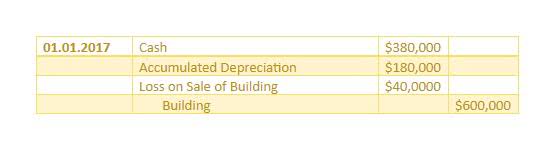
This allocation helps match the expense with the revenue generated by the asset. You should consult your own professional advisors for advice directly relating to your business or before taking action in relation to any of the content provided. Accumulated depreciation lowers the book value of an asset over time – it isn’t an amount you owe or have to repay. As a non-cash expense, it lowers your profits without affecting cash flow.
Understanding Is 401k Account Securities Account Options
It allows investors and analysts to assess the company’s capital expenditures, asset management, and future investment needs. Depreciation in the balance sheet, accumulated depreciation is presented as a deduction from the original cost of the asset. The accumulated depreciation balance, therefore, represents the cumulative amount of depreciation recorded on an asset.
Accurate Asset Valuation
Chartered accountant Michael Brown is the founder and CEO of Double Entry Bookkeeping. He has worked as an accountant and consultant for more than 25 years and has built financial models for all types of industries. He has been the CFO or controller of both small and medium sized companies and has run small businesses of his own.
What Are Depreciation Expenses?
Accumulated depreciation is typically shown in the Fixed Assets or Property, Plant & Equipment section of the balance sheet. If you want to calculate monthly depreciation, simply divide your annual total by 12. This presentation helps stakeholders understand both the original cost of the asset and how much of that cost has been allocated as depreciation. Control your assets easily with Asset Infinity & keep track of every valuable assets used to run your business. In our PP&E roll-forward, the depreciation expense of $10 https://www.bookstime.com/ million is recognized across the entire forecast, which is five years in our illustrative model, i.e. half of the ten-year useful life. Since the salvage value is assumed to be zero, the depreciation expense is evenly split across the ten-year useful life (i.e. “spread” across the useful life assumption).
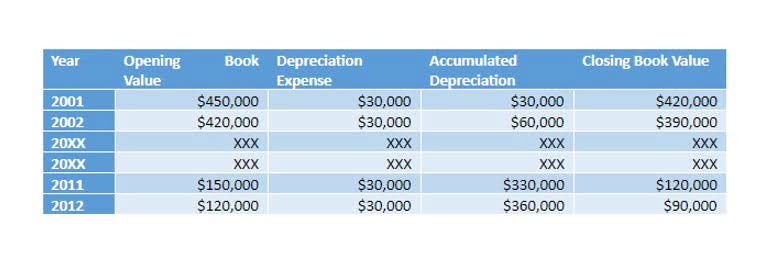
While the depreciation expense is the amount recognized each period, the accumulated depreciation is the sum of all depreciation to date since purchase. Let us consider the example of company A which bought a piece of equipment worth $100,000 and has a useful life of 5 years. The equipment is not expected to have any salvage value at the end of its useful life. Determine the accumulated depreciation at the end of 1st year and 3rd year. Let’s see some simple to advanced examples to understand the calculation of accumulated depreciation in normal balance of accounts balance sheet better. Under MACRS, the IRS assigns a useful life to different types of assets.
- The entry to record accumulated depreciation includes a debit to depreciation expense and a credit to accumulated depreciation.
- An accumulated depreciation account is used to track and accumulate the depreciation expense over the asset’s useful life.
- It represents the total amount of depreciation expense that has been accumulated over the life of an asset.
- The double-declining balance method, for example, assumes a shorter useful life than the straight-line method.
- There are six accepted methods for calculating depreciation, including the straight-line, declining balance, double-declining balance, sum-of-the-years’ digits, units of production, and half-year recognition methods.
- To determine accumulated depreciation, multiply the annual depreciation by the number of years the asset has been in use.
- The net impact of accumulated depreciation on the book value of an asset is a decrease in the asset’s value over time.
To calculate net book value, subtract the accumulated depreciation and any impairment charges from the initial purchase price of an asset. After three years, the company records an asset impairment charge of $200,000 against the asset. This means that the asset’s net book value is $500,000 (calculated as $1,000,000 purchase price – $200,000 impairment charge – $300,000 accumulated depreciation). It’s worth noting that while depreciation reduces the value of the asset on the balance sheet, the depreciation amount also appears on the income statement as an expense, reducing taxable income. Understanding the classification, treatment, and implications of accumulated depreciation is essential not only for accountants but also for asset managers and decision-makers. With tools like asset management software and integrated depreciation tracking, organizations can manage depreciation seamlessly and improve reporting accuracy.
Related AccountingTools Courses
- Depreciation is the annual expense that reduces your asset’s value each year.
- This adjustment shows you that depreciation is an accounting expense, not an actual cash outflow.
- Explore purpose-built solutions designed to simplify asset tracking, maintenance, and operational efficiency.
- By using a debit account, you can easily see the impact of depreciation on your business’s bottom line.
Accumulated depreciation doesn’t affect cash flow directly – it’s a non-cash expense that doesn’t involve money leaving your business. Managing depreciation, adjusting entries, and calculating accumulated depreciation can get complicated – especially as your business grows. If the straight-line depreciation was taken over a useful life of 5 years, the percentage per year would be ⅕. Under double declining balance, you’d take ⅖ of the law firm chart of accounts acquisition value each year. In the final year of depreciation, the amount may need to be limited in order to stop at the salvage value. Since the purpose of the contra account is to be offset against the balance on another account, it follows that the normal balance on the contra account will be the opposite of the original account.
Fixed asset depreciation and leasing – taken seriously
If it were to be categorized as a liability, this would create the incorrect impression that the reporting entity has a liability to a third party, which is not the case. Record accumulated depreciation as a credit on the balance sheet because it’s a contra asset – an account type that reduces the value of an asset. Accumulated depreciation is the sum of all depreciation on a fixed asset.
- Accumulated depreciation keeps a running total of all the depreciation expense recorded to date for that asset, while depreciation expense is an annual amount that only appears on the current year’s income statement.
- This value decreases over time as the asset is used to produce revenues.
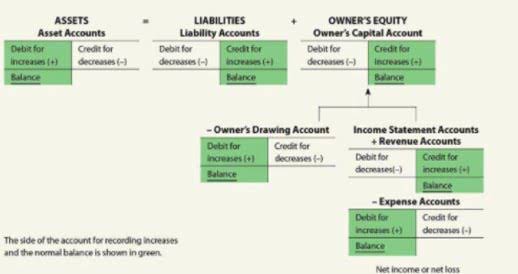
- Accumulated depreciation is recorded as a credit balance, as it is a contra entry to the depreciation expense, which is a debit balance.
- Calculating accumulated depreciation is a straightforward process, and there are several methods to choose from.
- There are other methods to calculate accumulated depreciation, including the double-declining balance method, which allows for higher depreciation earlier than the straight-line method.
Accounting software and asset management automation The automation of accounting processes and software entails utilizing software solutions to streamline finance … Healthcare accounting software Specialized accounting software, specifically AssetAccountant, plays an important role in healthcare organizations, especially regarding depreciation and lease … Fixed asset reconciliation is an important procedure in best practice accounting that guarantees the precision … Tracking accumulated depreciation over multiple periods can give you insight into your assets’ usage and aging. This information is valuable for planning asset replacements and evaluating the need for additional investments. The asset’s book value at the time of disposal (asset cost – accumulated depreciation) is compared with the sale price to determine a net gain or loss.
Recording Journal Entry of Accumulated Depreciation
- Once purchased, PP&E is a non-current asset expected to deliver positive benefits for more than one year.
- This account has a natural credit balance, rather than the natural debit balance of most other asset accounts.
- Accumulated depreciation normal balance signifies the customary accounting procedure of documenting the total depreciation expense of an asset throughout its useful lifespan.
- The net impact of accumulated depreciation on the book value of an asset is a decrease in the asset’s value over time.
- While the depreciation expense is the amount recognized each period, the accumulated depreciation is the sum of all depreciation to date since purchase.
- This classification is based on the matching principle, which requires that the cost of an asset be matched with the revenue it generates over its useful life.
For instance, if your accumulated depreciation is high relative to your asset values, it might indicate that your assets are aging and may soon require replacement. Conversely, low accumulated depreciation could suggest that your assets are relatively new or that you are using accelerated depreciation methods. Finding and understanding accumulated depreciation on the balance sheet is crucial for evaluating asset values and overall financial health. A common question among business owners is what type of account accumulated depreciation is. The answer is that accumulated depreciation is classified as a contra asset account.